
THE BRIEF
The artist is a painter and sculptor in his eighties with over 65 years of work behind him, spread inconsistently across three separate websites and undocumented records. What he wanted was one place that would hold all of it, specifically to be able to maintain his legacy when he is gone.
The reality with a career this long is that a list of works, however complete, does not explain it. His two-dimensional and three-dimensional work has evolved over time and needed easy access to his own writing, interviews, and reviews to create a cohesive narrative. A conventional portfolio would have shown the pieces but not the arc. So the website was built around the arc first and the portfolio second.
THE TIMELINE
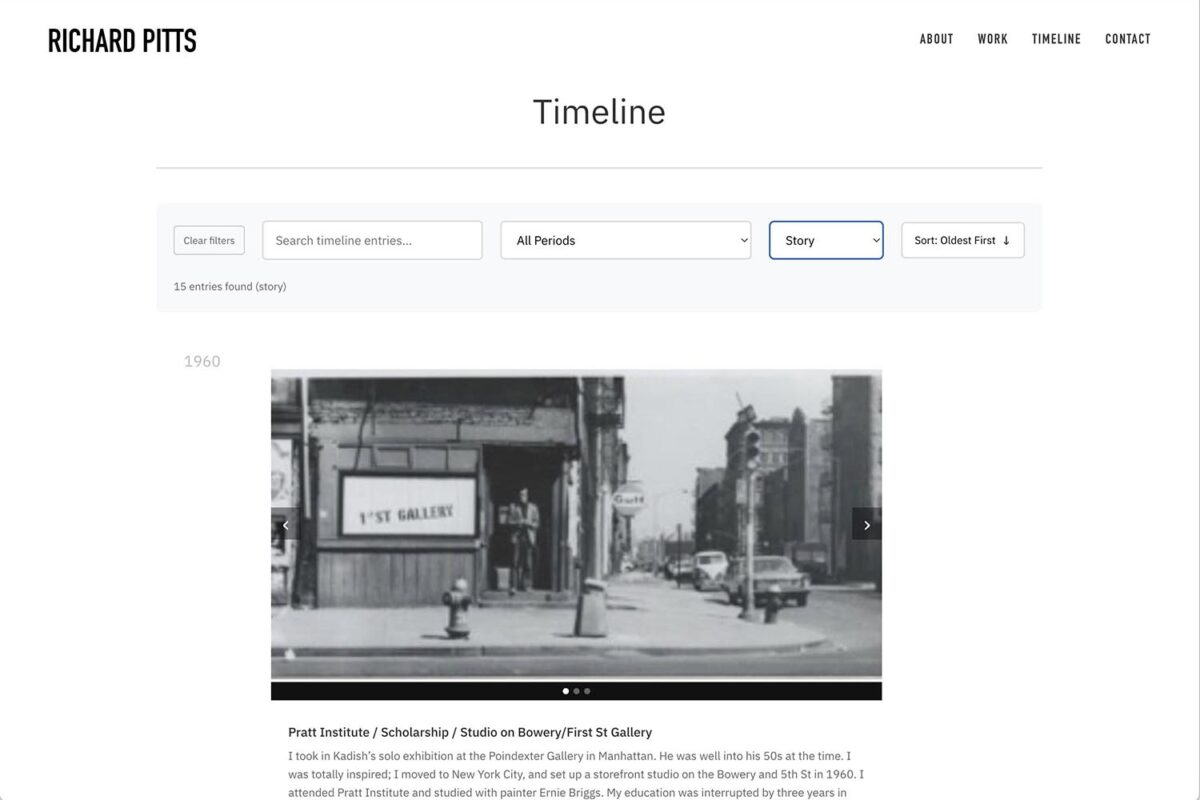
The timeline is the heart of the website, allowing the artist’s whole career to be laid out in one continuous run. Every record in the archive can appear here—works, exhibitions, publications, achievements, and even summary-stories about particular periods. Entries expand in place to show their full text and any further images. The run can be filtered by period, by type of record, or by search term—and read from either end.
If someone wants to know what was happening in the 2010s, they can filter by that term directly and get about a decade’s worth of content: the works, the shows the artist was in, and what was written about him, all together. Per the image below for example, a user can further filter by 2010s combined with just one of the record types (here “stories”) to get a focused view:
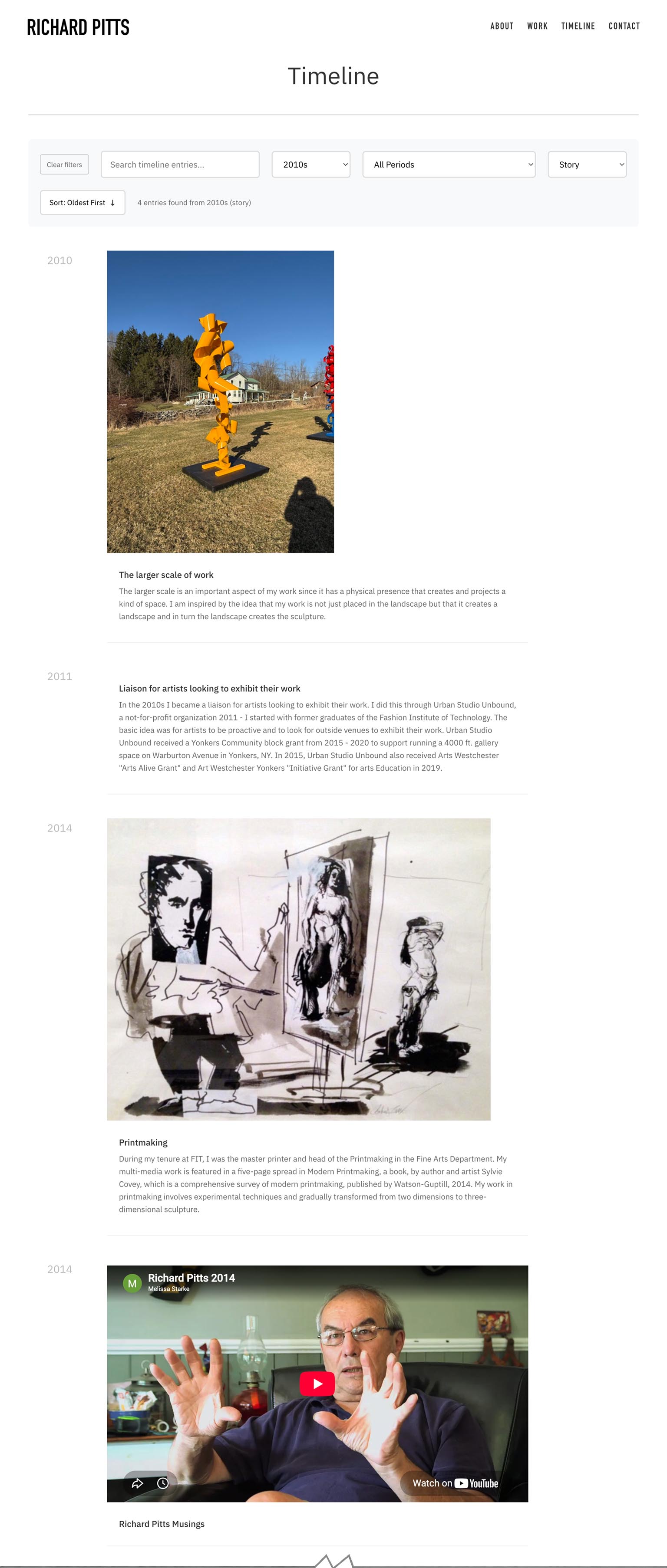
For an artist with a long and shifting practice, the timeline enables users to understand how the work evolved and it is the foundation of the legacy-building side to this website.
THE PUBLIC-FACING WEBSITE
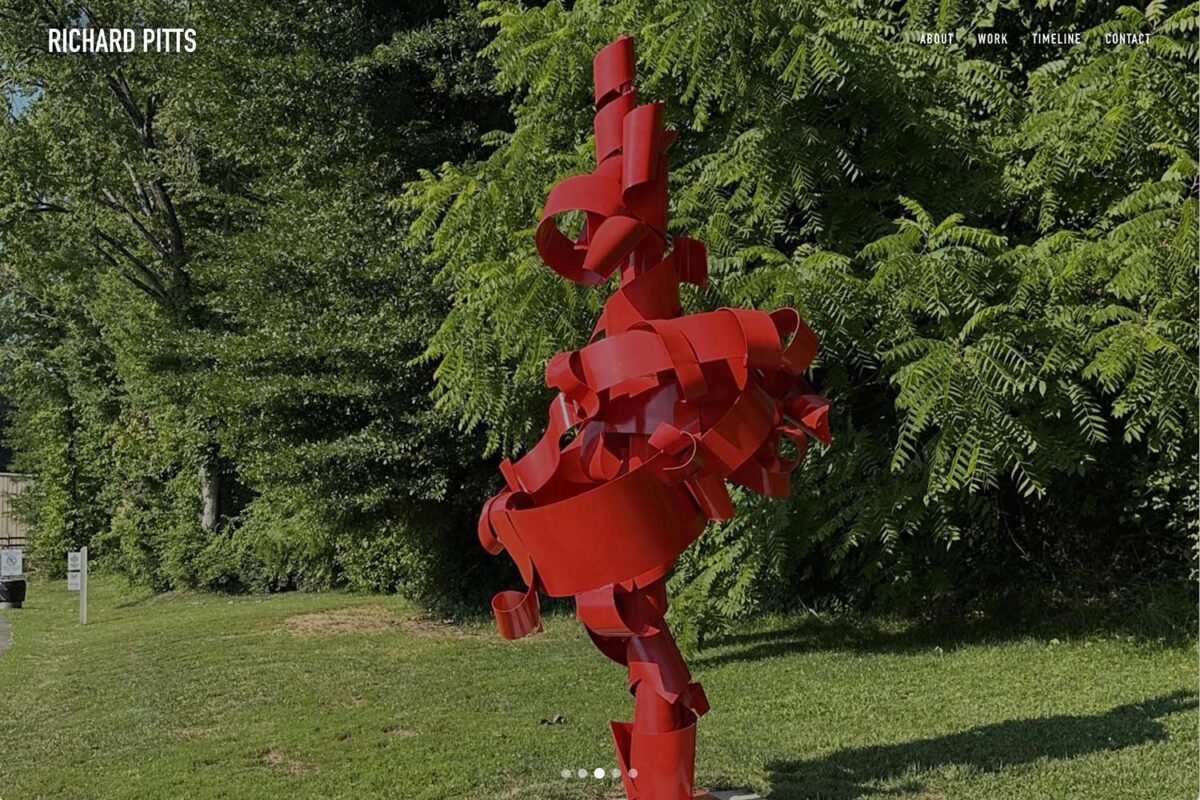
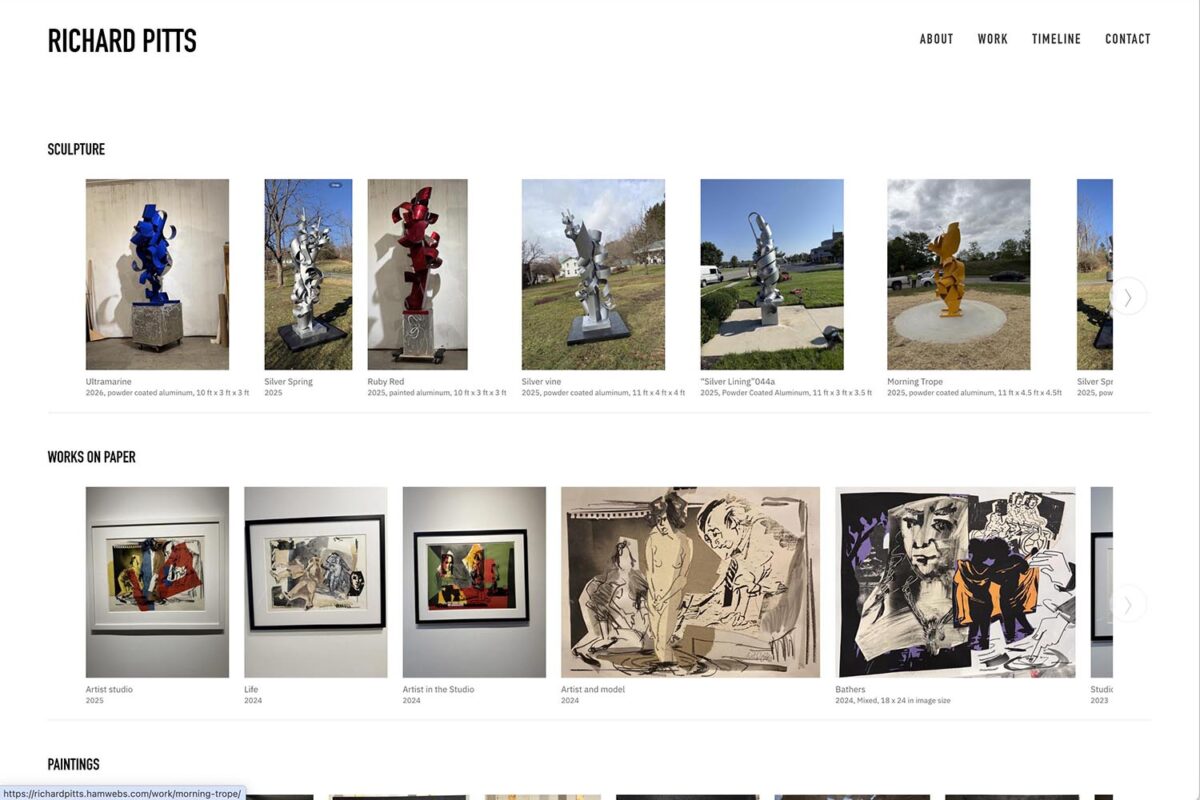
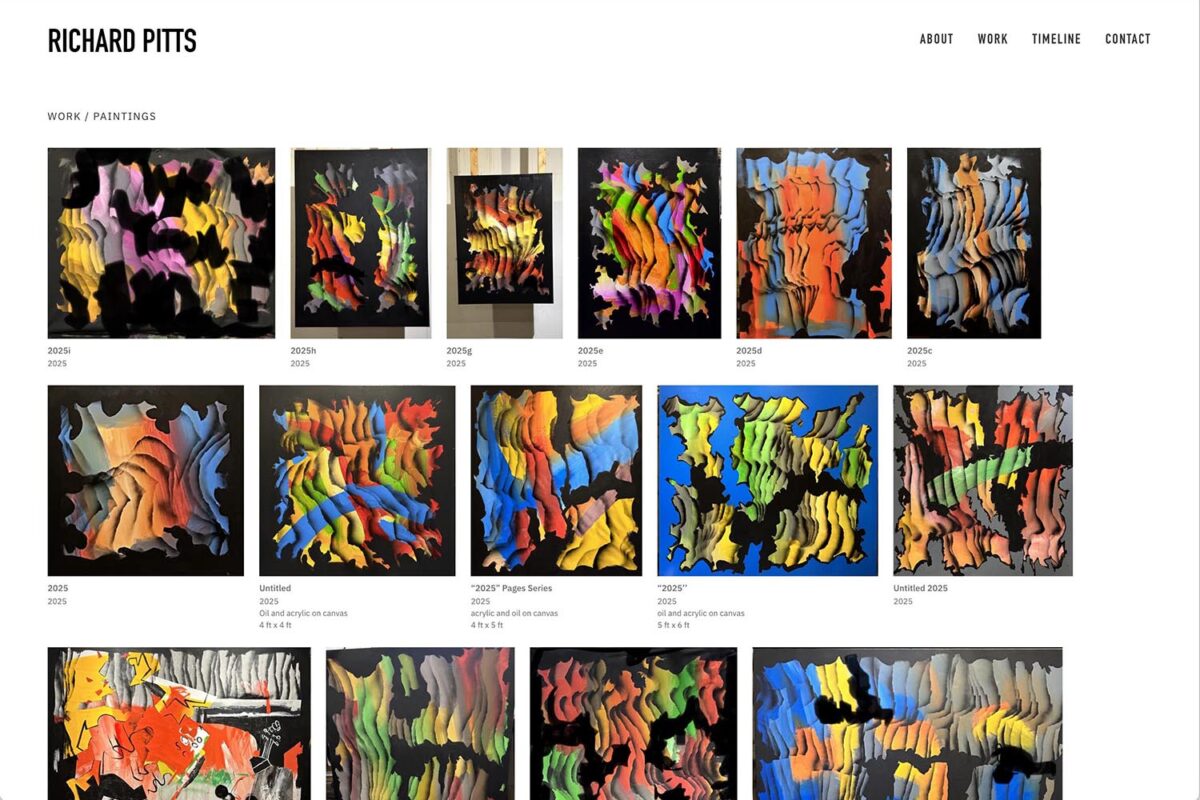
Around the timeline sits a full artist website—a homepage, an about page, the work archive and its category pages, single-work pages, and a contact page. These are custom-designed to suit the body of work but are familiar elements of a standard artist portfolio website.
Records that might otherwise be found only in separate sections (publications, events, reviews, videos, etc) are here merged into comprehensive timeline with filters that enable them to be viewed by type if desired.


WORKING TOOLS
The real power of the archive is what becomes possible once everything is organized in one place. The artist doesn’t just maintain records for legacy—he uses them to manage his career right now.
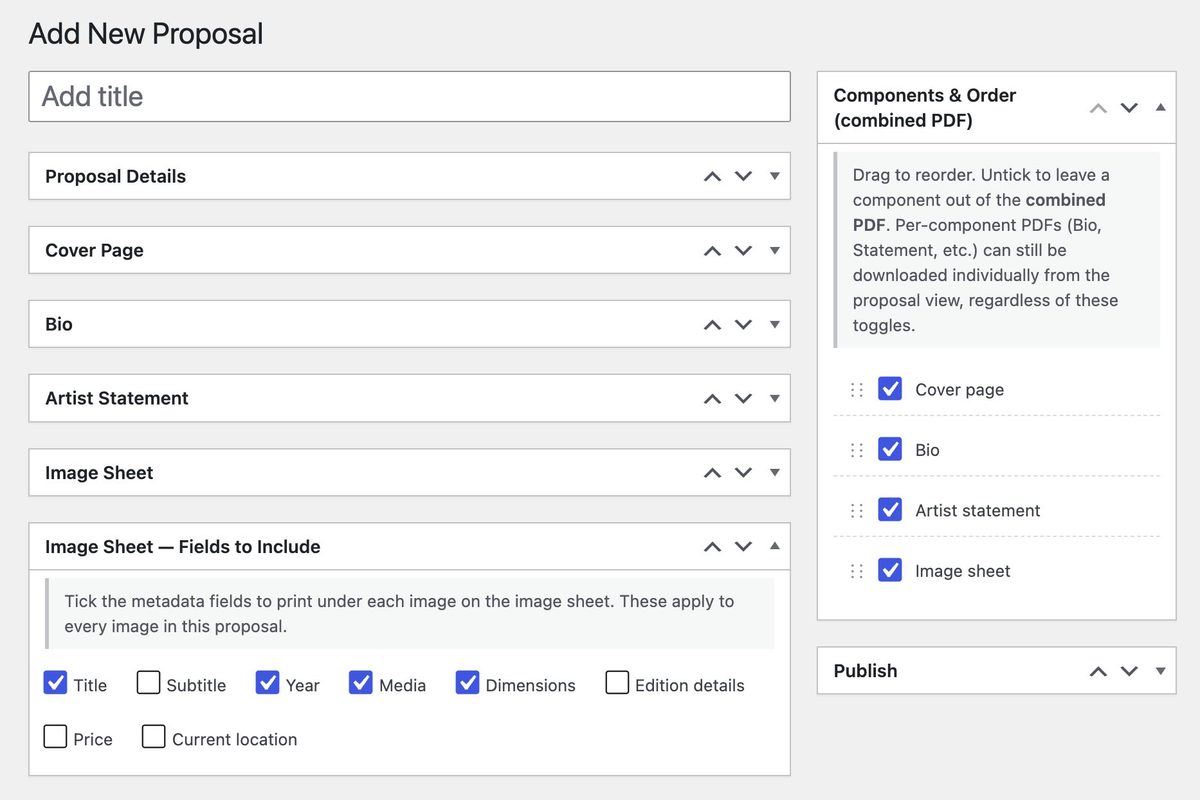
Proposals for Exhibitions: The artist’s work goes out to competitions, commissions and exhibition opportunities, and each of those asks for some combination of a cover page, a biography, an artist’s statement, and a sheet of images with captions. All of that already lives in the archive. The proposal builder assembles it—the artist chooses the works, the text and the order, and downloads a PDF, either as one document or as separate files where the application asks for separate uploads. Bios and statements are kept in a small library he can pull from and then edit for the particular opportunity, leaving the original untouched. Each proposal stays in the archive afterwards as a record of what was sent and when.

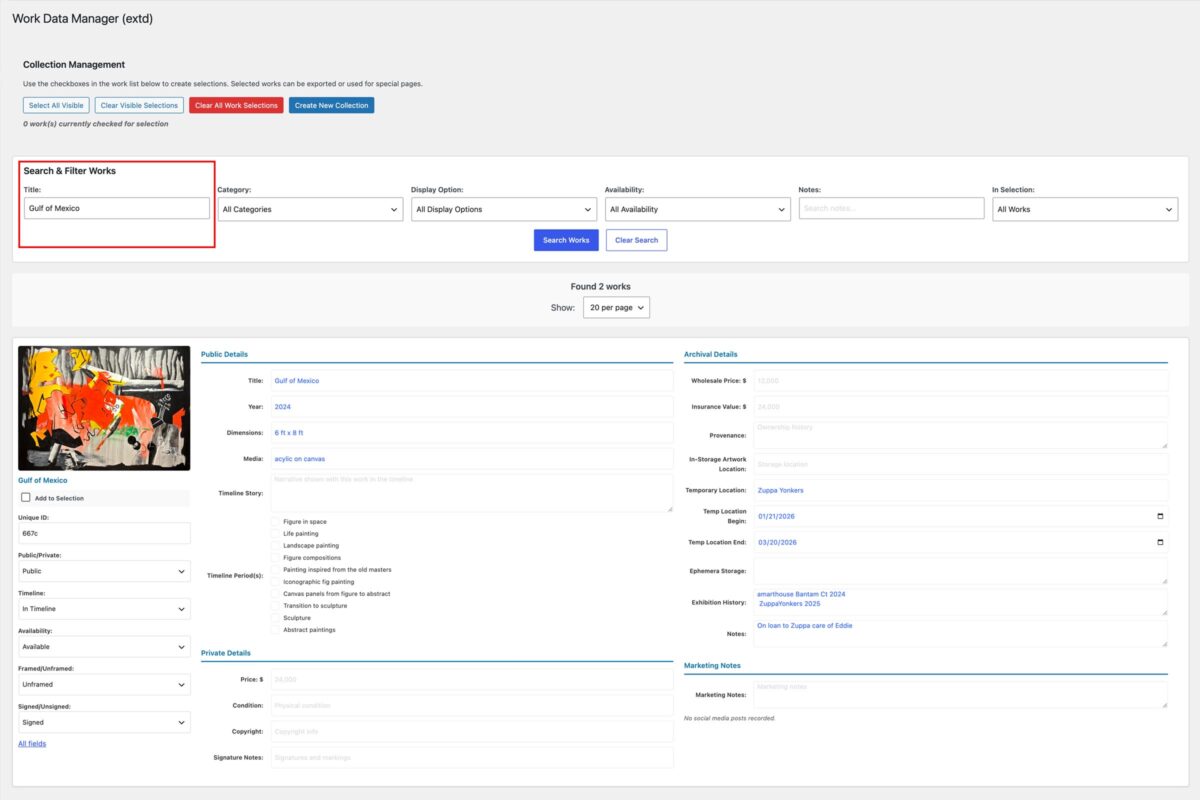
Managing the Archive: Records can be edited many at a time, filtered down to the ones being worked on. A selection can be saved as a private collection and shared as a link that expires on a date the artist sets, or behind a login, with a PDF generated from the same page. Short or long C.V.s are generated from a combination of records that include exhibitions, publications, and achievements. Works out for short-term or long-term exhibition are tracked. Gallerists, reviewers, collaborators, collectors and others are recorded as contacts. Full provenance is recorded, ready for a catalog raisonné. Certificates of authenticity are produced directly from the artwork records.

None of it needs a separate system. The archive and the website are one thing, owned by the artist, on his own hosting, in a format that can be exported in full at any time.
The artist is continuing to build the archive, adding and correcting from his iPad. What sits there now is a growing record of over 65 years of work that reads as one arc—a working tool for as long as he wants it, and a record that whoever looks after the work next can carry forward.
Category: artists & galleries

